WordPress Typography Plugins: Fonts, Hosting & Readability
Need to change your WordPress fonts? Check your theme and the block editor first. Many WordPress sites can adjust font family, size, spacing and weight without installing another plugin. Add a typography plugin when you need something specific: another font library, self-hosted brand fonts, Classic Editor controls or a text-resizing option.
Which typography problem are you solving?
Preview Google or Adobe fonts: Fonts Plugin. Host custom files locally: Custom Fonts or Use Any Font. Keep Classic Editor formatting tools: Advanced Editor Tools. Let readers change text size: Zeno Font Resizer.
First: try WordPress’s built-in typography settings
The WordPress typography controls include settings for font size, line height and other text properties where the theme and block support them. Open your site’s editor or theme settings and check the existing options. A theme-level font change is often easier to maintain than applying dozens of one-off font changes inside individual posts.
Typography tools compared
| Tool | Primary job | Important detail |
|---|---|---|
| Fonts Plugin | Choose and preview web fonts | Check free versus Pro font sources. |
| Custom Fonts | Upload or locally host fonts | Confirm file licenses and theme integration. |
| Use Any Font | Custom font uploads and assignments | Check its font-conversion setup and plan. |
| Advanced Editor Tools | Classic Editor typography and formatting | Not a replacement for site-wide theme styling. |
| Zeno Font Resizer | Visitor-adjustable text size | Test keyboard operation and layout at larger sizes. |
1. Fonts Plugin — browse fonts with a live preview
The Fonts Plugin adds font choices and live previews, with options covering Google Fonts, Adobe Fonts and custom font uploads across its editions. This suits a designer who wants to compare typefaces on real page content before publishing. Start with one body font and one heading font; adding many families and weights can slow loading and make pages harder to scan.
2. Custom Fonts — host branded fonts on your site
Custom Fonts by Brainstorm Force lets you upload font files and use locally hosted fonts. It is relevant when your brand uses a licensed typeface or you want to control where font requests go. Check the font’s actual web-embedding licence and upload appropriate web formats; owning a desktop font does not automatically grant website embedding rights.
3. Use Any Font — assign uploaded fonts to elements
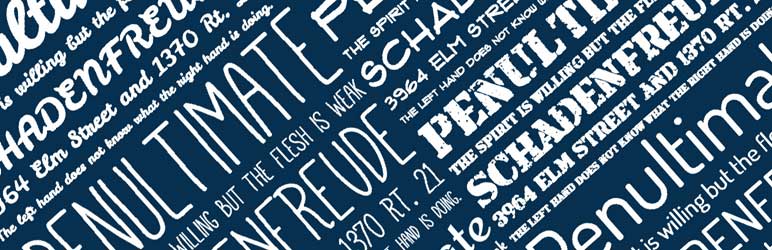
Use Any Font supports custom uploads and assigning fonts to site elements. The publisher documents a font-conversion setup, so review that step if you want a fully self-contained workflow. Compare it with Custom Fonts based on your theme and the precise font files you own.
4. Advanced Editor Tools — for Classic Editor users

The plugin formerly called TinyMCE Advanced is now Advanced Editor Tools. It adds formatting controls to Classic Editor and Classic blocks. Use it if your editorial team relies on that workflow, not as a reason to introduce inconsistent font sizes across every paragraph.
5. Zeno Font Resizer — visitor-controlled readability

Zeno Font Resizer provides front-end text-size controls. Its changelog records an April 2026 JavaScript rewrite. A resizer supplements good defaults; make sure your text remains readable when visitors use browser zoom, large system fonts or mobile accessibility settings.
A practical typography checklist
- Use a clear body font and avoid loading weights or character sets you never display.
- Prefer relative text sizes and test 200% browser zoom without clipped buttons or overlapping navigation.
- Check that headings, body copy and buttons retain sufficient contrast.
- Use licensed font files and check whether external font calls meet your site’s privacy requirements.
- Measure actual page performance before assuming a new typography plugin makes a site faster.
A consistent type system is usually more valuable than a huge font catalogue.
